The False Cultural Promises of a CEO
The False Cultural Promises of a CEO
Welcome to Issue #7!
Last week I promised to share my bite-sized definition of management. So here goes.
Management is how we organize people and things to solve problems for other people.
Why it Matters
It's hard to fix something if we can't describe it. Understanding management decisions and tradeoffs, ranging from dysfunction to excellence, is crucial for a brighter future where people benefit from productivity.
The Backstory
Management shapes our lives through its impact on markets, moods, salaries, and more. Despite industrial progress, management underperforms:
- 50% of Americans have left a job to escape their manager
- Only 36% of employees report feeling engaged at work
- Even doubling engagement would still yield substandard results
The Bottom Line
Before improving management, we must develop shared language about what it is, what it should accomplish, and where it fails.
Big Idea #7: The Land of Broken Promises
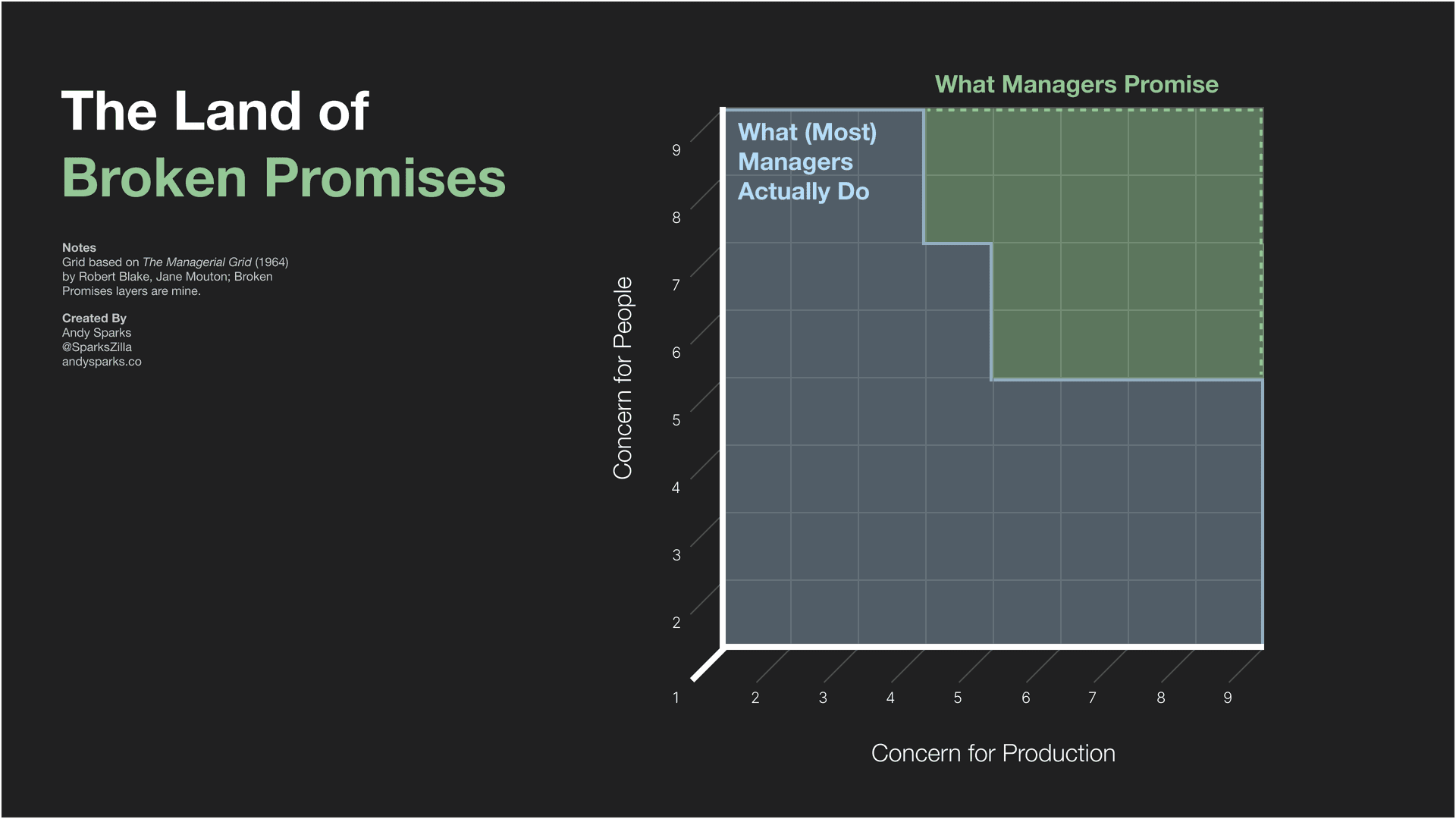
The Managerial Grid framework (based on Robert Blake & Jane Mouton's 1964 model) visualizes management styles across two dimensions: concern for people and concern for production.
Theory
Managers often operate in what I call "the land of broken promises," claiming high concern for both people and production while delivering neither. As Patrick Collison noted, "people's disposition with regard to the company is actually a function of what they feel like they signed up for."
Startups particularly struggle with this gap, promising fast-paced, people-friendly cultures that fail to materialize.
Practice
How to Use It:
- Plot where you believe your management style falls on the grid
- Ask your team where they perceive your style
- Compare self-perception with team feedback
- If desired, set goals for shifting your style
- Communicate changes to your team and request ongoing feedback
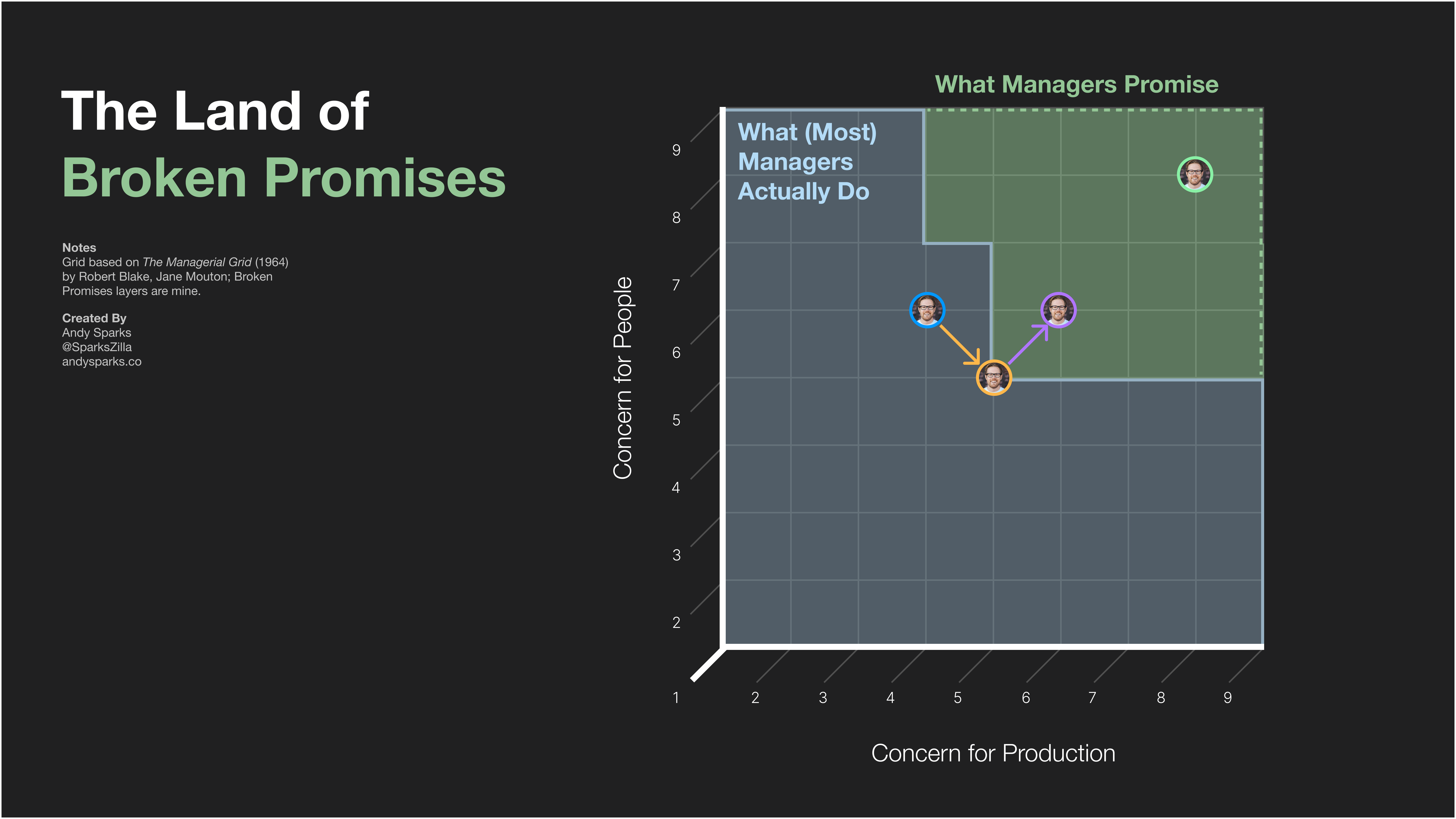
Example: A manager believing they excel at both dimensions discovers their team sees them as production-focused but dismissive of people concerns. After adjusting to prioritize production, they swing too far and neglect people.
The Bottom Line: Self-awareness enables accurate expectations and behavioral goals that improve both employee experience and organizational performance.
Reads & Resources
Articles
Madman, Architect, Carpenter, Judge: Roles and the Writing Process
This piece addresses internal criticism that blocks writing productivity by distinguishing roles in the creative process.
From Twitter
What do 500 people in tech want to see from their employer?
Bri Kimmel surveyed 500 tech workers. The top request was straightforward: paid holidays.
Audio
Invest Like the Best #204: Sam Hinkie
Sam Hinkie, founder of 87capital and former Philadelphia 76ers GM, discusses building meaningful relationships in a thoughtful podcast conversation.
Books
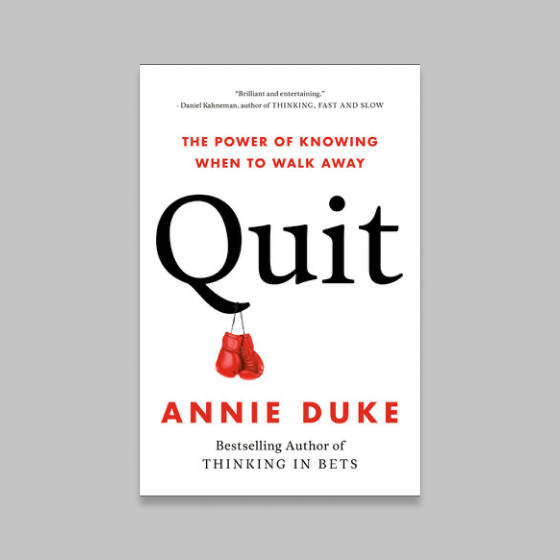
Quit: The Power of Knowing When to Walk Away
Annie Duke's new book explores strategic withdrawal. A CEO friend noted: "I took more actionable stuff away from listening to her speak for 45 min than most speakers combined."
Dice Roll
This startup reimagines performance evaluation by incorporating feedback from employees' networks, recognizing that "the network around an employee often has a different opinion than their manager."