A Model for Cutting Down on Gossip and Drama at Work
A Model for Cutting Down on Gossip and Drama at Work
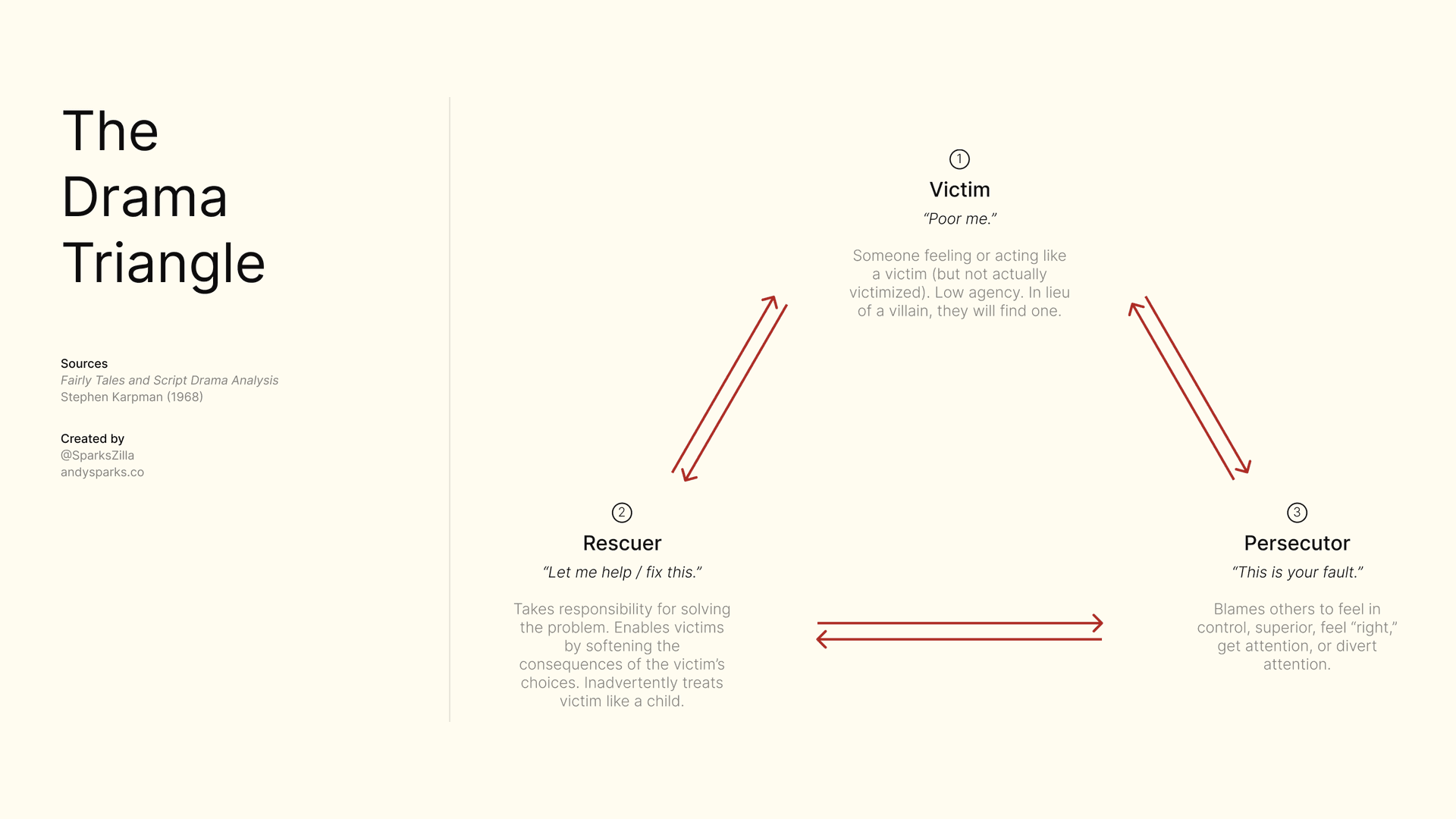
Andy Sparks explores the Drama Triangle, a psychological framework developed by Dr. Stephen Karpman in 1972 that explains how interpersonal conflicts emerge when people unconsciously adopt one of three dramatic roles: Victim, Rescuer, or Prosecutor.
The Drama Triangle Framework
The Three Roles
Rescuers focus on fixing others' problems while avoiding their own unpleasant feelings. Sparks notes that founders frequently adopt this role, though their "help" often backfires through micromanagement.
Prosecutors assign blame and find fault in others, motivated by feelings of superiority or diverting attention from their own shortcomings.
Victims complain and feel disempowered, acting as though something was done to them rather than taking responsibility.
Key Insight
These roles are situational and fluid. People shift between them depending on context rather than being fixed in one role permanently.
Real-World Examples
- A CEO acts as Prosecutor toward engineers, then switches to Rescuer by completing work independently
- Managers claim "nobody wants to work anymore" (Victim mentality)
- Sales blames Marketing for poor leads while Marketing blames Sales for weak conversion (mutual Prosecution)
Moving Beyond Drama
The solution involves recognizing these patterns and shifting toward alternative behaviors: coaching instead of rescuing, challenging instead of prosecuting, and creating solutions rather than playing victim.
David Emerald's The Power of TED offers this alternative framework for healthier workplace dynamics.