The Stories in Our Heads (Fact vs. Meaning)
The Stories in Our Heads (Fact vs. Meaning)
Andy Sparks explores how we construct narratives around observed events, distinguishing between facts and the meanings we assign to them.
The Mountain Climbing Metaphor
Sparks uses the comparison of a startup CEO to a mountain expedition guide. Both provide maps or visions that outline objectives, milestones, and anticipated obstacles. However, neither the literal map nor the business plan survives contact with reality unchanged. Teams must adapt through both top-down vision and bottom-up adjustment when unforeseen circumstances arise.
Core Concept: Facts vs. Meaning
The central thesis distinguishes between two categories:
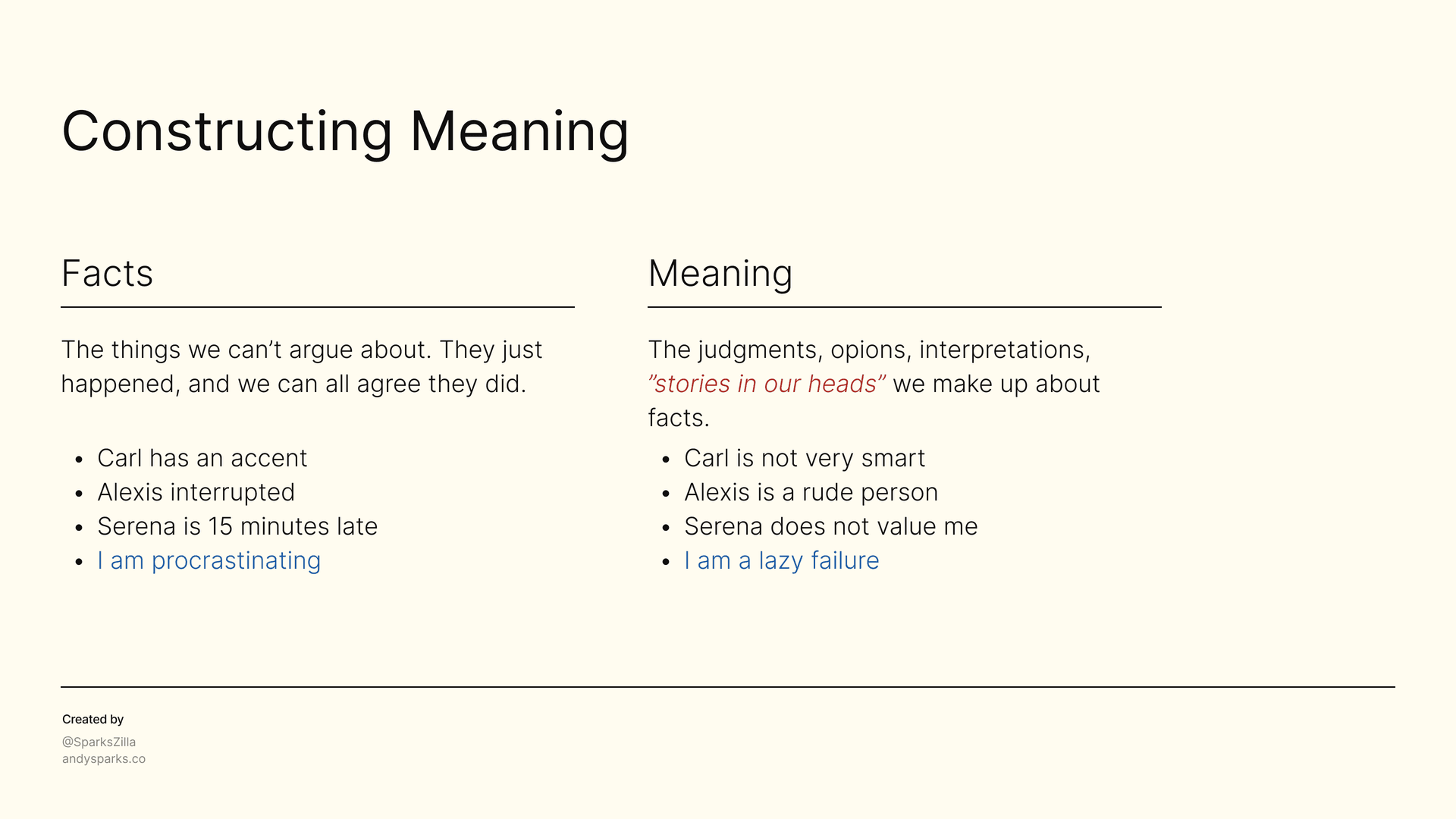
Facts are observable events everyone can verify. Sparks illustrates this with a water balloon example: the fact is that someone got hit; the meaning depends on interpretation.
Meanings are interpretations we create about facts, especially when information is missing. "People are especially prone to making up stories when there are missing facts."
Three Practical Steps
When recognizing you're operating in "Meaning Land":
- Create a T-Chart separating facts from meanings
- Identify what information could clarify the situation
- Reflect on relationship dynamics that influenced your interpretation
Reads & Resources
Articles
- Paul Graham on hiring only when lack of that person limits growth
Audio
- "The Unicorn Launcher #3" podcast featuring accountability and transparency in coaching
Books

- Inspired: How to Create Tech Products Customers Love by Marty Cagan
Dice Roll
- Dee Hock's management time allocation framework (5% subordinates, 20% peers, 25% up, 50% self)