Conducting a Time Audit

Conducting a Time Audit
A Question
"What can you learn about managing yourself from how the most effective people you know manage themselves?"
A Quote
"Executives who do not manage themselves for effectiveness cannot possibly expect to manage their associates and subordinates."
Peter Drucker, The Effective Executive
Conducting a Time Audit
Dee Hock's philosophy holds that great managers should allocate their time as follows: 50% managing themselves, 25% managing up, 20% managing across, and only 5% managing down. Most actual managers reverse these proportions, spending excessive time on downward management.
To manage yourself effectively, begin by examining how you spend your time.
The Three-Step Framework: Get It; Know It; Use It
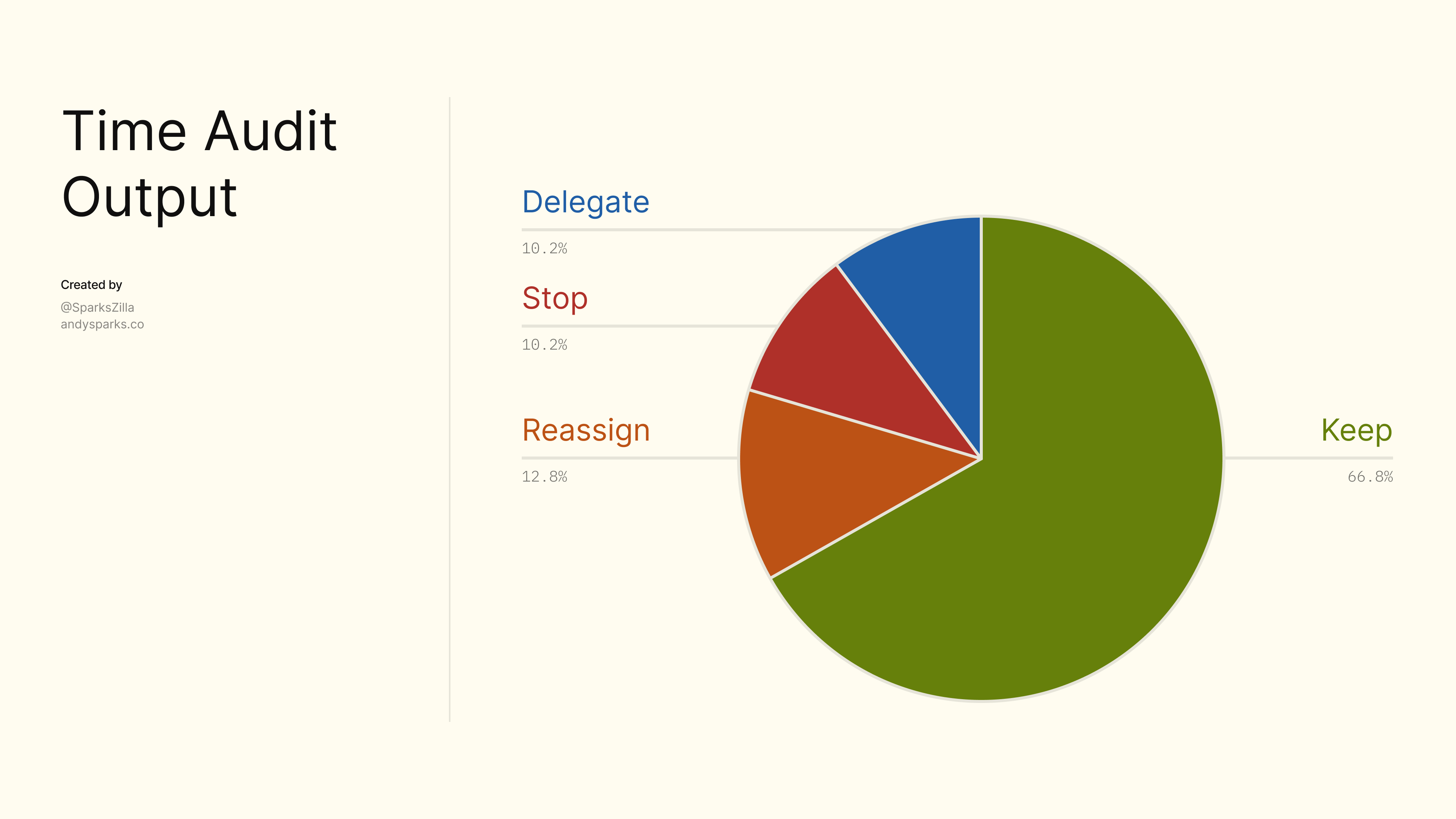
Get It: Track and classify how you're spending your time over 3-4 weeks (ideally twice yearly).
Know It: Review your data to determine whether your time allocation aligns with your priorities.
Use It: Make decisions about eliminating, delegating, reassigning, or modifying activities.
Tracking and Classifying Your Time
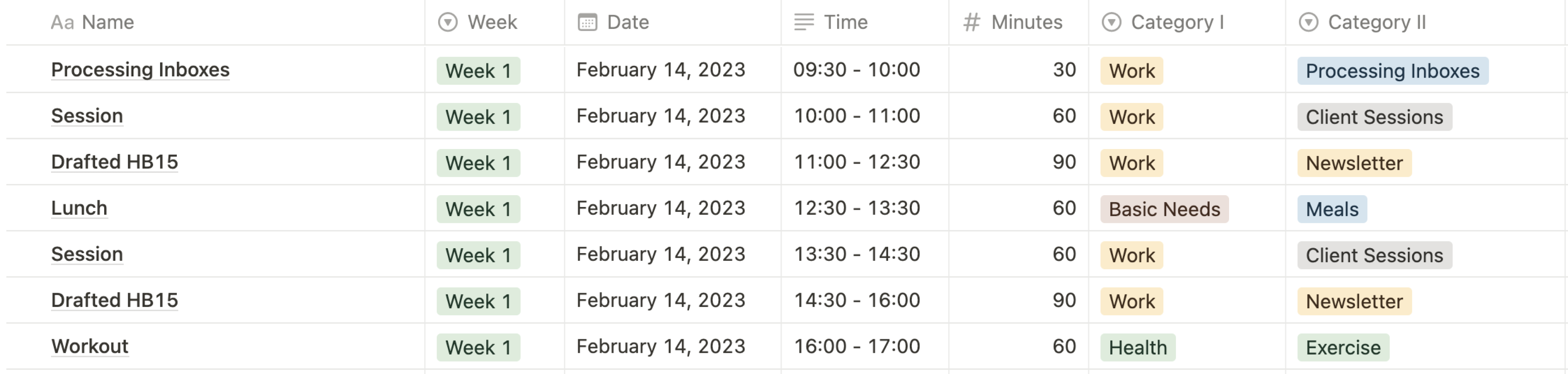
Record your activities with specificity rather than broad categories. Instead of logging "marketing," note "reviewed product marketing messaging draft." Use spreadsheets, Slack channels, or calendar reviews to document your work.
Key recommendations:
- Record activities immediately after completing them
- Ensure your calendar reflects reality
- Set weekly goals for time allocation at the week's start
- Ask direct reports: "What do I do that wastes your time?"
Four Decision Questions for Each Activity
-
"What would happen if this were not done at all?" If nothing, stop this activity.
-
"Could this be done by somebody else just as well, if not better?" If yes, delegate.
-
"Does this activity need more work from someone else before it's ready for my review?" If yes, reassign.
-
"Could this activity be modified to be shorter or better use my time?" If yes, modify.
Activities passing these filters should be kept if they feel essential.
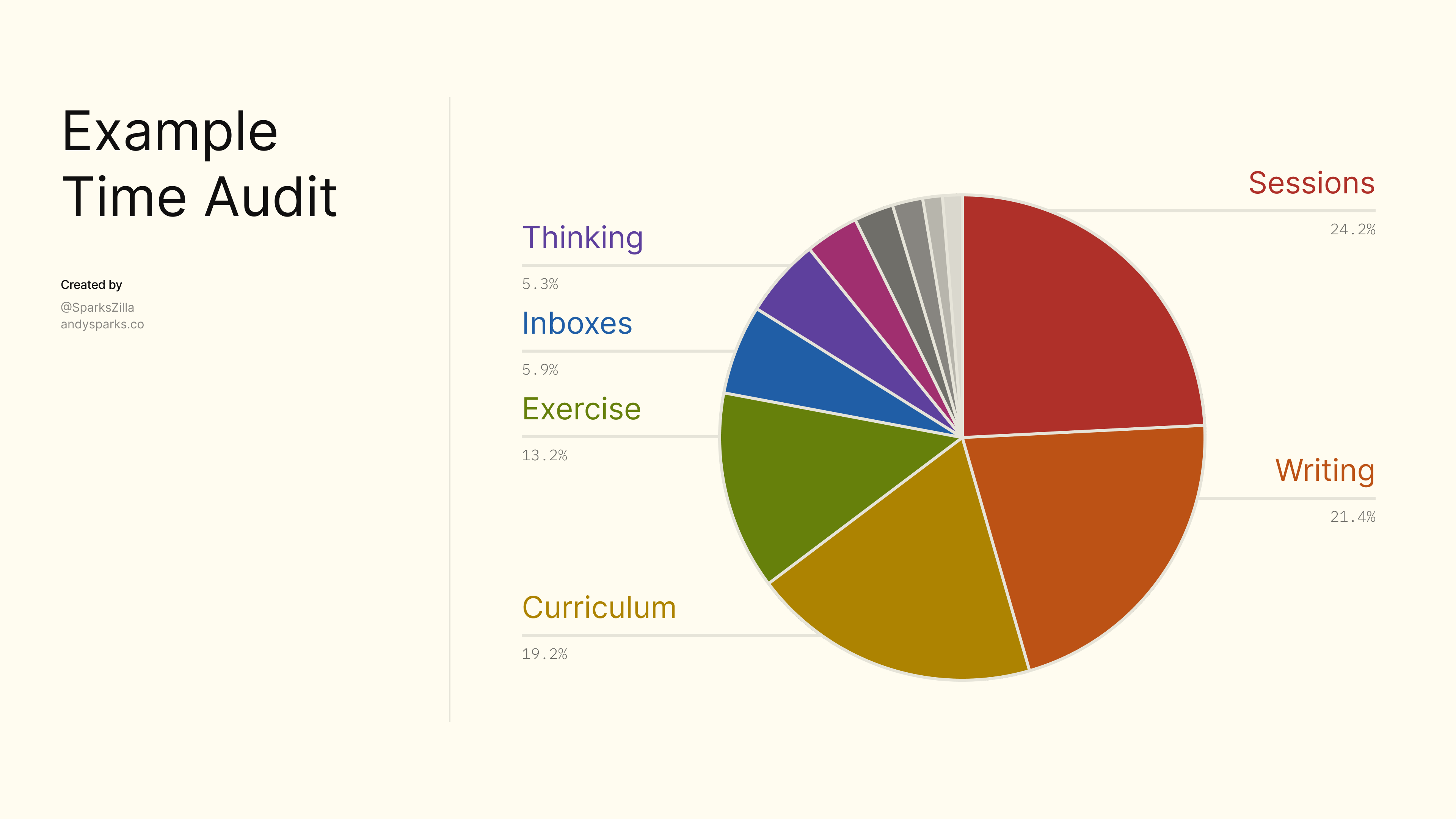
The Compounding Effect
A CEO using her time even 10% more effectively can cascade that efficiency throughout the organization. The real power emerges when leaders model this practice and encourage their teams to conduct their own time audits.
Reads & Resources
Articles
How to Use Gmail More Effectively
Andreas Klinger applies David Allen's "Getting Things Done" methodology to email management, offering practical systems for processing inbox overload.
From Twitter
The Best of Lenny's Newsletter in 2022
Lenny Rachitsky explores product management fundamentals and how great product teams create market-fit solutions.
Audio
Solving the Cold Start Problem
Andrew Chen, a16z partner and former Uber growth leader, discusses why startups sometimes fail to gain traction despite effort.
Books
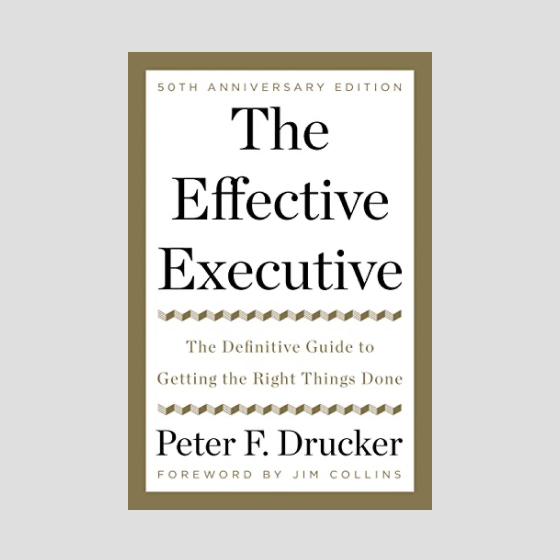
Peter Drucker's essential text addresses self-management as foundational to leadership effectiveness, often overlooked by emerging leaders.
Dice Roll
The Cognitive Distortions of Founders
Michael Dearing at Harrison Metal identifies five common founder thinking patterns, each containing both superpowers and potential pitfalls.
Three Key Takeaways
- A focused CEO managing her time well is fundamentally a good CEO.
- A CEO modeling time audits and encouraging organizational adoption builds a more focused company.
- A CEO completing a time audit AND soliciting team feedback becomes both effective and appreciated.